

- Reference: Elevator Facilities Safety Management Act No. 14839, July 26, 2017
Legal Basis
According to Article 13-2 (Detailed Safety Inspection) of the Elevator Facilities Safety Management Act, elevators that meet certain requirements must undergo a detailed safety inspection every three years from the date of the first detailed inspection. In particular, elevators that have been in operation for 15 years or more from the completion inspection date are required to undergo partial replacement of major components to ensure safety, which is a legally mandated safety measure.
Mandatory Replacement Components
The major components that must be replaced for elevators that have been in operation for more than 15 years are as follows:
-
Door Derailment Prevention Device
- Function: Prevents the door from disengaging and ensures safe guidance during emergencies
- Purpose: Protects passengers from fall or entrapment accidents caused by door malfunctions
-
Adjustment of the Gap Between the Car and Landing Doors
- Standard: The gap between the car door and the door frame must be maintained within 5 mm
- Purpose: Prevents accidents in which children or users’ hands and objects may become trapped
-
Gearless Synchronous Hoisting Machine and Rope Brake
- Function: Prevents overspeed, prevents forced door opening, and applies a double braking system
- Purpose: Prevents fall accidents that may occur due to mechanical failure or braking malfunction
-
Automatic Rescue Operation (ARO)
- Function: Automatically moves to the nearest floor and opens the door in the event of a power outage or malfunction
- Purpose: Enables rapid and safe evacuation of passengers to prevent entrapment accidents
Necessity of Elevator Replacement
As time passes, the mechanical and electrical performance of elevators and escalators deteriorates, and the aging of safety components increases the risk of accidents. In particular, after approximately 15 years from the date of installation, partial replacement and performance upgrades become essential due to the following environmental factors:
- Enhanced Safety : Existing equipment may not meet the latest safety standards, requiring replacement with advanced safety components
- Improved Convenience : User satisfaction is enhanced through the addition of new functions such as automatic rescue systems and remote monitoring
- Energy Efficiency : Replacing outdated motors and control systems with high-efficiency products leads to reduced power consumption
- Regulatory Compliance : Renovation in accordance with the latest elevator safety standards eliminates administrative and legal risks
Full Elevator Replacement Items
- Machine Room
- Car
- Entrance
- Hoistway
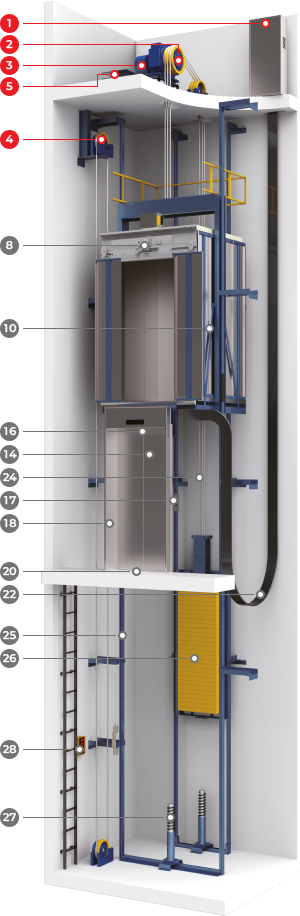
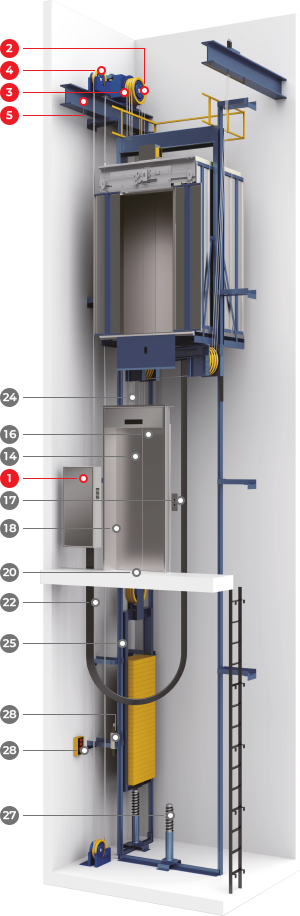
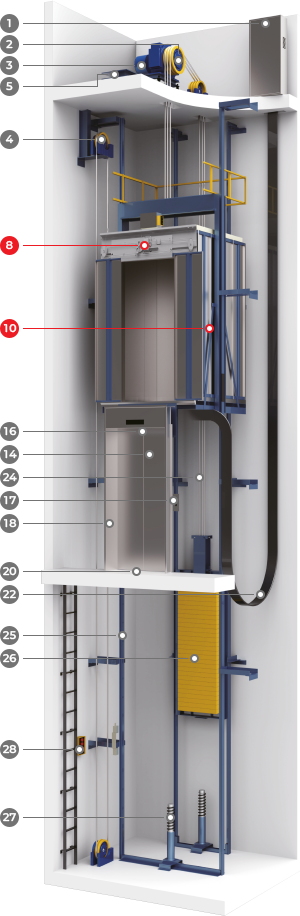
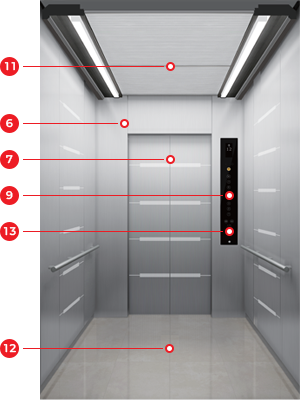
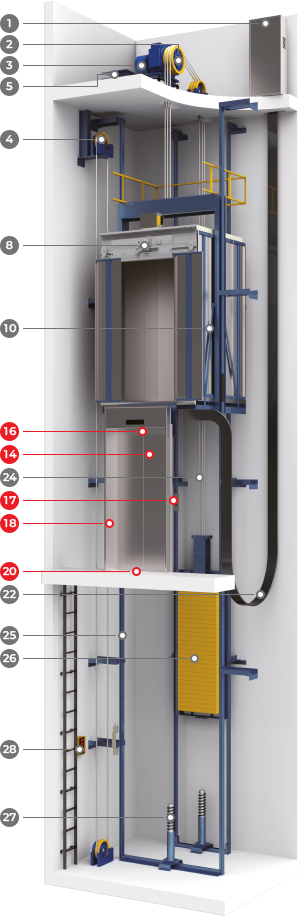
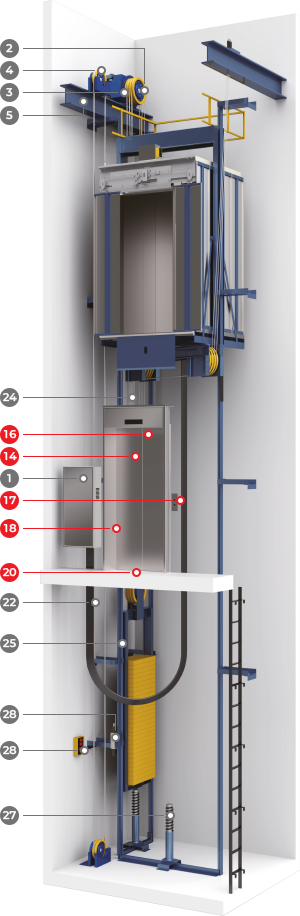
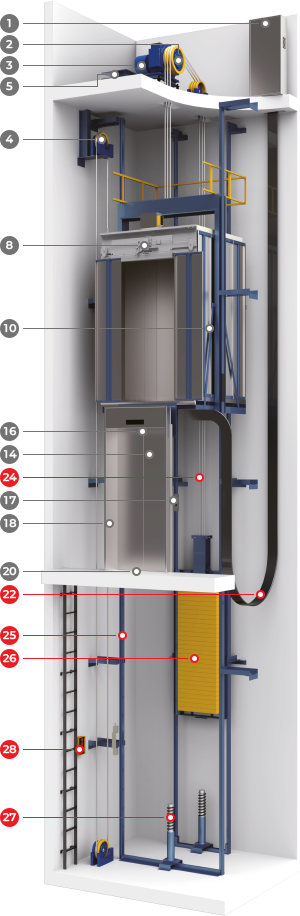
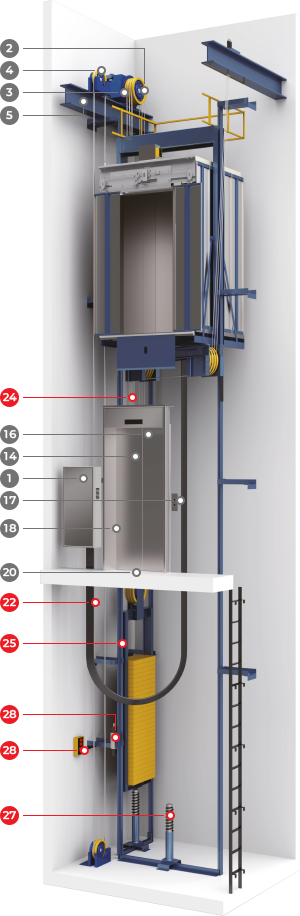
| Category | Item | Replacement | Reuse |
|---|---|---|---|
| Machine Room | 1 Control Panel | ||
| 2 Hoisting Machine | |||
| 3 Drive Motor | |||
| 4 Governor | |||
| 5 Machine Bed (Primary Beam) | |||
| Car | 6 Car Wall | ||
| 7 Car Door | |||
| 8 Car Door Operator | |||
| 9 Car Operating Panel / Position Indicator | |||
| 10 Car Frame | |||
| 11 Ceiling | |||
| 12 Floor | |||
| 13 Car Equipment Box | |||
| Entrance | 14 Landing Door (Main Floor) | ||
| 15 Landing Door (Other Floors) | |||
| 16 Landing Door Operator | |||
| 17 Hall Button / Position Indicator | |||
| 18 Door Frame (Main Floor) | Covering | ||
| 19 Door Frame (Other Floors) | Covering | ||
| 20 Landing Sill (Main Floor) | |||
| 21 Landing Sill (Other Floors) | |||
| Hoistway | 22 Traveling Cables (T-Cable) | ||
| 23 Landing Cables | |||
| 24 Ropes | |||
| 25 Rails | |||
| 26 Counterweight | |||
| 27 Buffer | |||
| 28 Safety Switches | |||
| 29 Floor Detection Device | |||
| Others | 30 Landing Door Derailment Prevention Device | Compliant with Latest Revised Regulations (Newly Applied) | |
| 31 Upward Overspeed Prevention Device | |||
| 32 Unintended Door Opening Prevention Device | |||
| 33 Emergency Rescue Device (ARD) Applied | |||